
Cupernham Junior School

Online Safety
At Cupernham Junior School, we take the safety of our pupils very seriously and this includes their safety whilst being online.
Therefore, we would like to share with you some information around our online safety curriculum in school as well as signpost support that is available for you as parents and carers.
Cupernham's Online Safety Lead
Our Online Safety Lead at Cupernham Junior School is Mr Wright. Should you need any support, advice or guidance around online safety, please do not hesitate to contact the school to speak to either Mr Wright or a member of the safeguarding team (DSL).
What is Online Safety?
Digital technology plays an important role in the lives of children and young people. They use the internet to learn, communicate, play games, create content, watch videos, use social media, access artificial intelligence (AI) tools and stay connected with friends and family. Children may access online services through smartphones, tablets, computers, games consoles, smart TVs and other internet-enabled devices.
Online safety is about helping children use technology safely, responsibly and positively while understanding and managing the risks that can arise online. It involves educating children about how to stay safe, make informed choices, protect their personal information and seek help when something does not feel right.
The internet offers enormous opportunities for learning, creativity, communication and collaboration. It gives children access to information, educational resources and experiences that can enrich their learning and help them develop important digital skills for the future.
However, the online world also presents risks. Children may encounter inappropriate or harmful content, misinformation, scams, cyberbullying, online grooming, pressure from others, harmful online communities or attempts to obtain personal information. Increasingly, children must also understand the risks associated with artificial intelligence, including manipulated images, deepfakes, misleading content and online impersonation. Current safeguarding guidance highlights the need for children to be aware of risks relating to online content, contact, conduct and commerce. [assets.pub...ice.gov.uk], [wslaw.co.uk]
As part of developing digital resilience, children need to learn how to protect their privacy, manage their online reputation, think critically about the information they encounter and understand that content shared online can remain accessible long after it has been posted. They should also know how to report concerns and where to seek support if they experience anything online that makes them feel unsafe, worried or uncomfortable.
At Cupernham Junior School, we are committed to working in partnership with parents and carers to ensure that children develop the knowledge, skills and confidence to enjoy the benefits of technology safely and responsibly.
Support for Parents and Carers
Navigating the online world as a parent or carer can sometimes feel challenging, particularly as new apps, games, social media platforms and AI-powered technologies continue to emerge. At Cupernham Junior School, we believe that the most effective way to keep children safe online is through strong partnerships between school and home.
The resources below provide up-to-date guidance on online safety, parental controls, social media, gaming, messaging apps, artificial intelligence, cyberbullying and digital wellbeing.
Recommended Online Safety Resources
NSPCC Online Safety Hub
The NSPCC provides practical advice on talking to children about online safety, setting parental controls, managing screen time and understanding popular apps, games and social media platforms.
NSPCC Online Safety [https://ww...e-safety/.], [gov.uk]
Thinkuknow (National Crime Agency CEOP Education)
Offers age-appropriate advice, educational resources and guidance for parents. It also provides information about reporting concerns relating to online exploitation or grooming.
Thinkuknow
UK Safer Internet Centre
Provides guidance on parental controls, online safety issues, reporting harmful content and keeping children safe online.
UK Safer Internet Centre
Childnet
Offers excellent parent and carer guides, conversation starters and practical advice for supporting children of all ages online.
Childnet Parents and Carers
Internet Matters
Provides age-specific advice, family online safety plans, parental control guides and advice on a wide range of online safety issues.
Internet Matters
Common Sense Media
Offers independent reviews, age ratings and guidance for apps, games, films and online platforms.
Common Sense Media
Parent Zone
Provides expert advice on helping children develop healthy and safe online habits.
Parent Zone
NSPCC and O2 Net Aware
Offers regularly updated reviews of social media platforms, apps and games popular with young people.
Net Aware
Educate Against Hate
Provides advice for parents and carers on protecting children from online extremism, radicalisation and harmful influences.
Educate Against Hate
Lucy Faithfull Foundation
Provides support and guidance for parents and carers concerned about inappropriate or harmful sexual behaviour, both online and offline.
Lucy Faithfull Foundation
Key Advice for Parents and Carers
Research and safeguarding guidance continue to highlight the importance of open communication and active parental involvement in children's online lives. Online safety should be approached in the same way as road safety or personal safety: through regular conversations, guidance and support.
We encourage parents and carers to:
- Talk regularly with your child about their online life, including the websites, games, apps and devices they use.
- Set appropriate parental controls and privacy settings on devices, gaming systems and internet-connected services.
- Keep devices in shared family spaces where possible and maintain an interest in your child's online activities.
- Be aware of age restrictions and terms of use for apps, games and social media platforms.
- Help children think critically about information they see online, including misinformation, fake news and AI-generated content.
- Encourage children never to share personal information, passwords or images without first speaking to a trusted adult.
- Remind children that people online may not always be who they claim to be.
- Encourage children to tell a trusted adult immediately if anything online makes them feel worried, uncomfortable, upset or unsafe.
- Model positive digital behaviour and healthy technology habits.
Understanding Age Restrictions
Many online services set minimum age requirements. These age limits are determined by the provider and may change over time. Parents and carers should always check the current requirements directly with the platform before allowing children to create accounts.
For primary-aged children, it is particularly important that access to social media, messaging services and online gaming platforms is carefully monitored and that any accounts comply with the provider's terms of service.
Working Together
One of the most effective ways to keep children safe online is to know:
- Who they are communicating with.
- What they are doing online.
- Which apps, games and platforms they are using.
- Where they can go for help if something goes wrong.
This advice comes from a shared commitment to children's safety and wellbeing. While the internet offers tremendous opportunities for learning, creativity and connection, children can also encounter inappropriate content, online scams, cyberbullying, harmful communities and other safeguarding risks. Current safeguarding guidance highlights the importance of helping children recognise and respond appropriately to these risks.
SMART Rules
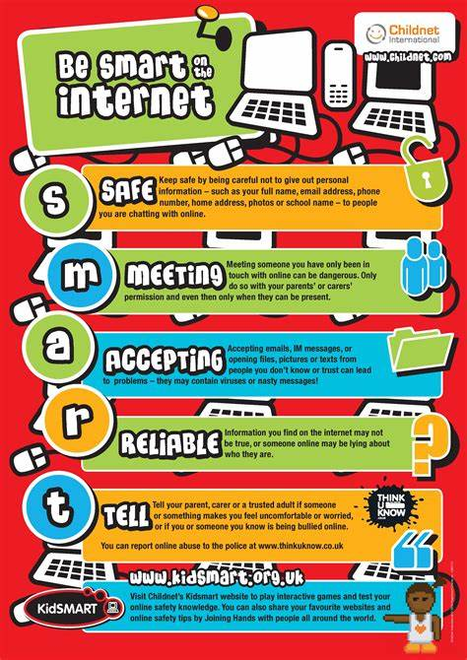
In school, we use Childnet's SMART Rules to help children learn how to stay safe online. These simple and memorable messages encourage children to think carefully about what they share, who they communicate with and how they seek help when needed.
Learn more about SMART Rules here: